MOSFRAME · March 29, 2026
How to Choose the Right Wall Art Size for Your Space: A Complete Guide to Perfect Proportions
Selecting the right wall art size can transform your space from ordinary to extraordinary, yet it remains one of the most challenging aspects of interior design. The difference between artwork that enhances your room and pieces that appear awkward or out of place often comes down to proper sizing and placement.
Understanding the relationship between wall dimensions, furniture scale, and visual balance will help you create stunning focal points that elevate your entire interior design scheme.
Understanding the Golden Rules of Wall Art Sizing
Professional interior designers rely on established proportions to create visually harmonious spaces. The most fundamental rule suggests that wall art should occupy approximately 60-75% of the available wall space above furniture. This creates optimal visual weight without overwhelming the surrounding elements.
For standalone wall installations without furniture below, artwork should generally span one-third to two-thirds of the wall width. This proportion ensures the piece commands attention while maintaining balance within the room's overall composition.
The 2/3 Rule for Furniture Placement
When hanging artwork above furniture, measure the width of your sofa, console table, or headboard, then multiply by 0.67. This calculation provides the ideal maximum width for your wall art selection. For example, a 90-inch sofa would accommodate artwork up to 60 inches wide.
Room-Specific Sizing Guidelines
Living Room Wall Art Dimensions
Living rooms typically require larger statement pieces or carefully curated gallery walls. Above a standard three-seat sofa, consider artwork measuring 48-72 inches wide. For expansive walls without furniture, pieces ranging from 36-84 inches create appropriate visual impact.
The volcanic pumice textures in contemporary stone sculptures work exceptionally well in living spaces, where their substantial presence and organic forms complement both modern and traditional furnishings.
Bedroom Art Sizing
Bedroom walls above headboards benefit from artwork spanning 50-75% of the bed width. For queen beds (60 inches), optimal art width ranges from 30-45 inches. King beds (76 inches) accommodate pieces up to 57 inches wide.
Consider the ceiling height when selecting vertical dimensions. Standard 8-foot ceilings work well with artwork 16-24 inches tall, while higher ceilings can accommodate larger vertical pieces.
Dining Room Considerations
Dining room artwork should complement table dimensions and seating arrangements. Above a dining table, artwork width should not exceed the table length, typically ranging from 24-48 inches depending on table size.
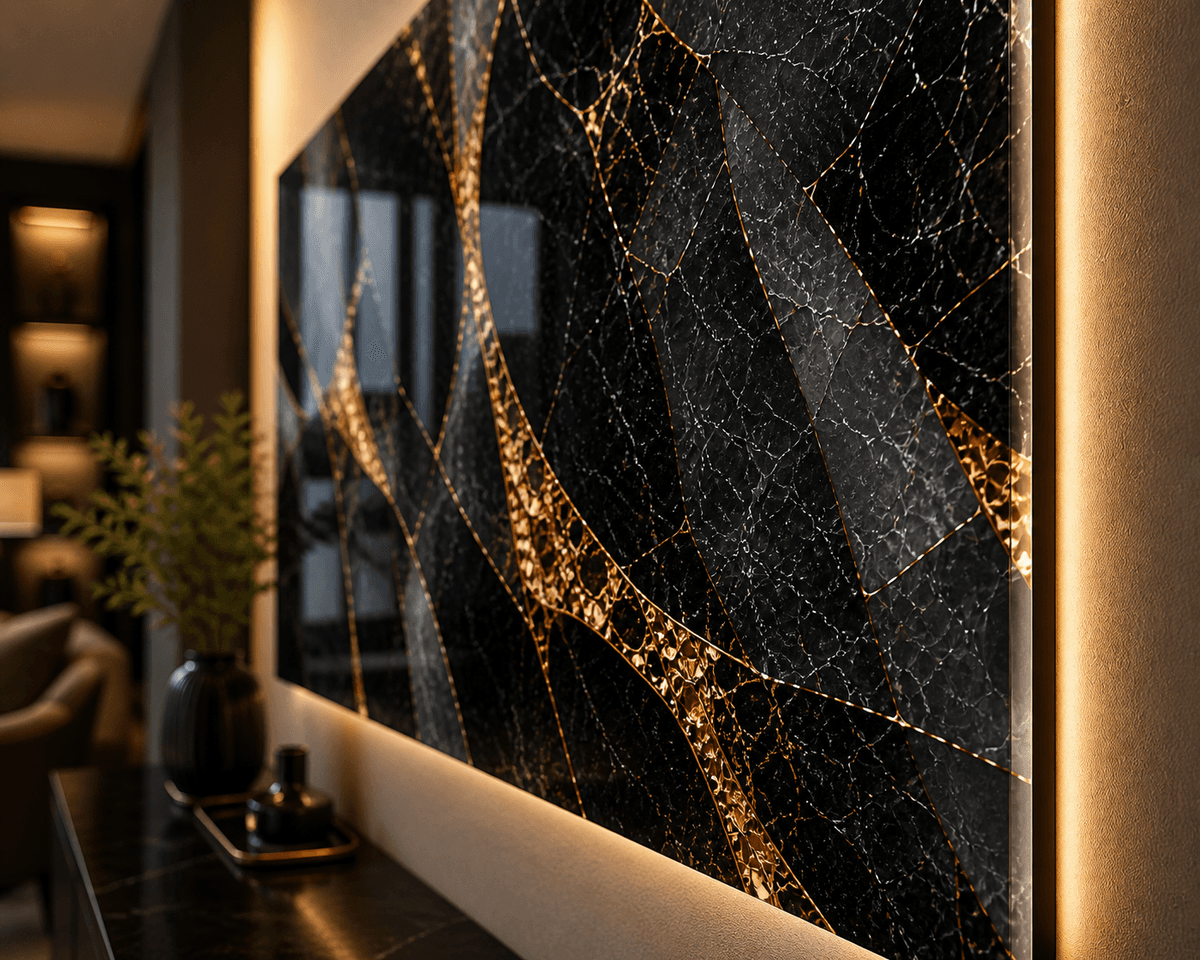
Mixed-media pieces incorporating reflective elements and resin can create stunning effects in dining spaces, where varying lighting conditions throughout the day reveal different visual depths and textures.
Ceiling Height and Vertical Proportions
Ceiling height dramatically impacts artwork sizing decisions. Higher ceilings accommodate larger pieces and allow for more generous spacing between multiple artworks.
Standard 8-9 Foot Ceilings
For typical residential ceiling heights, artwork should generally not exceed 32 inches in height when placed above furniture. This leaves appropriate visual breathing room between the artwork and ceiling while maintaining proper scale with furnishings.
High Ceilings (10+ Feet)
Rooms with soaring ceilings can support dramatically larger artwork or multiple pieces arranged vertically. Consider pieces up to 48 inches tall, or create dynamic compositions using several coordinated works.
Gallery Wall and Multiple Piece Arrangements
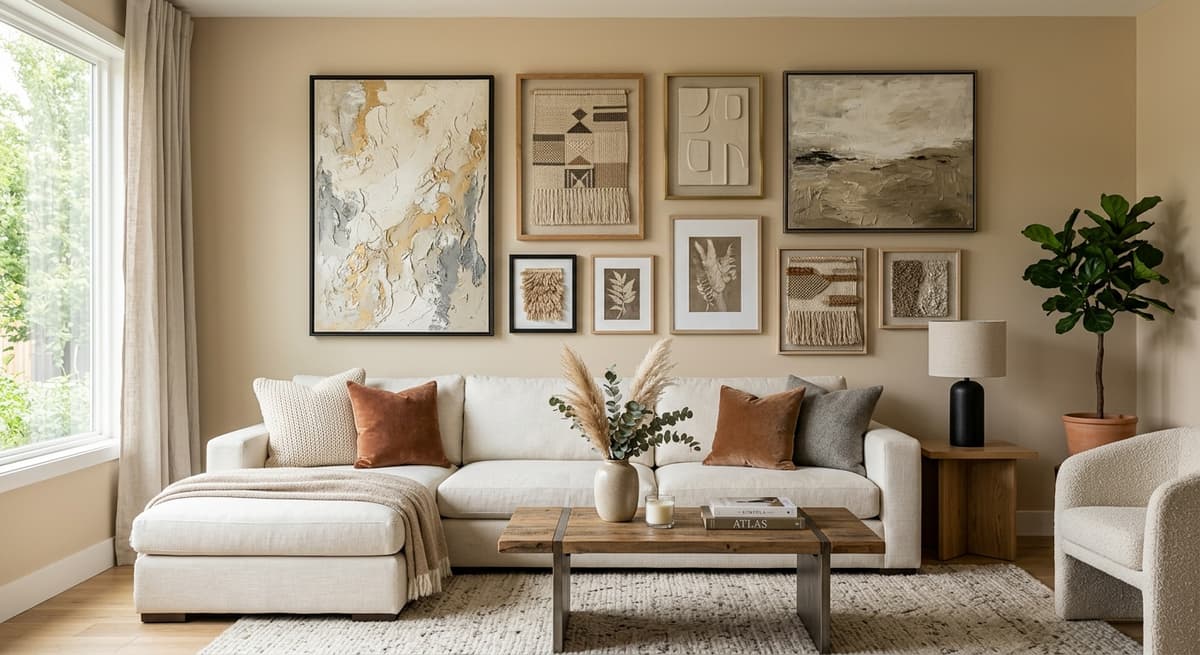
Gallery walls offer flexibility in sizing while creating compelling visual narratives. When planning multiple piece arrangements, treat the entire collection as a single artwork unit for sizing purposes.
Creating Cohesive Groupings
Maintain 2-3 inches of space between individual pieces within gallery arrangements. The outer perimeter of your grouping should follow the same proportional guidelines as single large pieces.
Mix various sizes within your collection, but maintain visual balance through consistent framing, color palettes, or thematic elements. This approach works particularly well when combining different artistic mediums and textures.
Common Sizing Mistakes to Avoid
Choosing Pieces That Are Too Small
The most frequent error in wall art selection involves choosing pieces that appear insignificant within their surroundings. Small artwork on large walls creates visual disconnection and makes spaces feel incomplete.
Ignoring Furniture Scale
Artwork must relate proportionally to nearby furniture. Oversized pieces above delicate furniture can appear top-heavy, while tiny pieces above substantial furnishings look inconsequential.
Neglecting Viewing Distance
Consider typical viewing distances when selecting artwork sizes. Pieces viewed primarily from across a room can be larger and more detailed than those examined up close in hallways or intimate spaces.
Measuring and Planning Your Space
Accurate measurements form the foundation of successful wall art selection. Use painter's tape to outline potential artwork positions before making purchases. This technique helps visualize proportions and prevents costly sizing errors.
Tools for Success
Invest in a quality measuring tape and level for precise placement. Many designers create cardboard templates matching artwork dimensions to test positioning and scale before installation.
Document your measurements and room photos when shopping for artwork. Having specific dimensions and visual references ensures informed decisions whether shopping online or in galleries.
Special Considerations for Unique Architectural Features
Rooms with distinctive architectural elements require adjusted sizing approaches. Vaulted ceilings, exposed beams, built-in shelving, and fireplaces all influence optimal artwork proportions.
Work with existing focal points rather than competing against them. Large statement pieces work well on uninterrupted walls, while smaller collections complement areas with architectural detail.
Lighting and Its Impact on Perceived Size
Lighting dramatically affects how artwork appears within a space. Well-lit pieces can appear larger and more prominent, while inadequately lit artwork may seem to disappear into the background.
Consider natural light patterns throughout the day, as well as artificial lighting options. Textured pieces and those incorporating reflective elements can create varying visual effects as lighting conditions change.
Making Your Selection
Armed with proper measurements and proportional guidelines, you can confidently select wall art that enhances your space's unique character. Remember that these guidelines provide starting points rather than rigid rules – personal preference and artistic vision should ultimately guide your decisions.
Quality craftsmanship in both materials and construction ensures your investment maintains its visual impact over time. Whether drawn to the raw, organic appeal of natural stone textures or the contemporary sophistication of mixed-media compositions, choosing pieces that resonate with your aesthetic sensibilities while respecting proportional principles creates truly memorable interior spaces.
Take time to live with your space and understand its unique characteristics before making final selections. The right wall art, properly sized and thoughtfully placed, becomes more than decoration – it transforms your environment into a reflection of your personal style and enhances your daily living experience.